The “Invisible Subsidy” That Is Changing How Nigeria Cooks
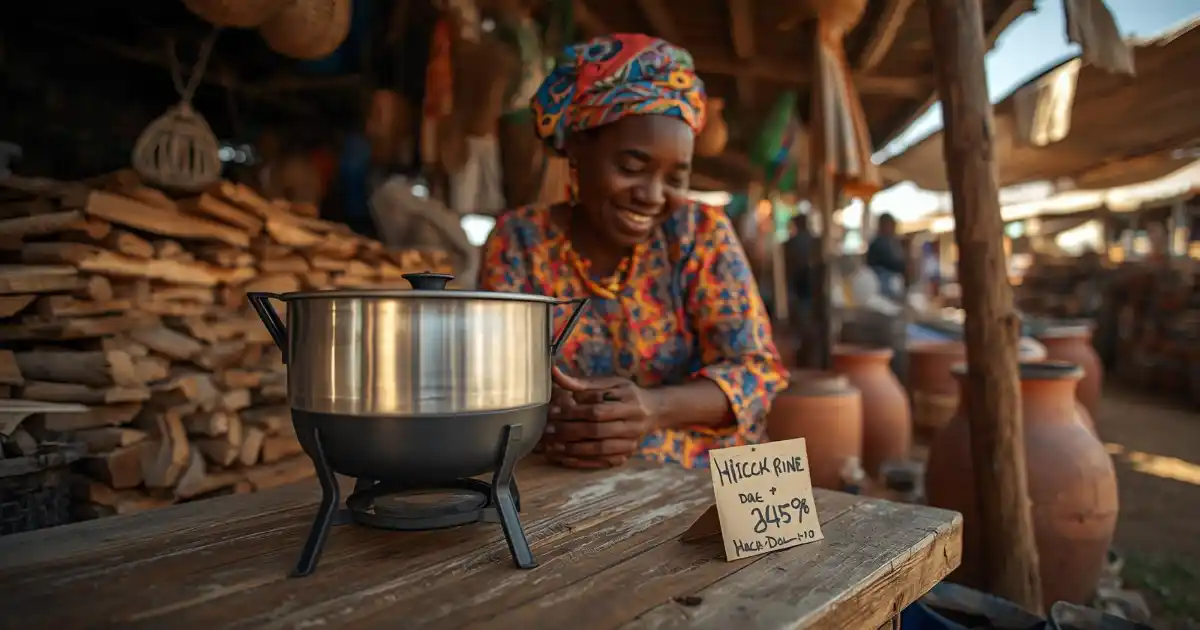
In the bustling markets of Kano, a quiet revolution is taking place one that has little to do with government handouts and everything to do with the global air we breathe. Families who once relied on smoky, expensive firewood or kerosene are now taking home high-tech, fuel-efficient cookstoves for a fraction of their manufacturing cost. The driving force behind this shift isn't charity; it is a sophisticated financial engine known as carbon finance, and it is reshaping Nigeria’s energy landscape.
BURN Manufacturing, a leader in clean cooking solutions, has successfully leveraged this model to overcome one of the biggest hurdles in the green energy transition: affordability. For years, the technology to reduce indoor air pollution has existed, but the high upfront cost of efficient stoves kept them out of reach for the millions of households living below the poverty line. By tapping into the global carbon credit market, BURN has found a way to bridge that gap.
How the Model Works
The concept is surprisingly simple yet effective. Every time a Nigerian household switches from a traditional open fire to one of BURN’s high-efficiency "ECOA" or "Jikokoa" stoves, they significantly reduce the amount of fuel needed to cook meals. This reduction translates to fewer trees cut down and less carbon dioxide released into the atmosphere.
These "avoided emissions" are meticulously tracked, verified, and converted into carbon credits. International corporations looking to offset their own carbon footprint purchase these credits. BURN then uses that revenue to subsidize the retail price of the stoves. The result is a high-quality appliance often costing upwards of $40 to produce being sold to local consumers for as little as $5 to $10.
Local Impact, Global Reach
The impact of this financial model is visible on the ground. In Kano, where BURN launched a massive assembly plant in 2024, the local economy is seeing a dual benefit. First, the factory has created hundreds of direct manufacturing jobs, employing a significant number of women in technical roles. Second, the widespread adoption of the stoves is putting money back into the pockets of ordinary citizens.
With the cost of cooking fuel rising, families using traditional methods often spend a large portion of their income just to prepare meals. The efficient stoves cut fuel consumption by more than half, generating savings that households can redirect toward education, healthcare, or small business investments.
A Scalable Solution for 2026
As of January 2026, the success of this program in Nigeria has drawn the attention of investors and policymakers across West Africa. Critics initially worried that carbon markets were too volatile to support long-term infrastructure, but the sustained demand for high-quality, verified credits has proven the model's resilience.
For Nigeria, a country battling both rapid deforestation and the health crises associated with smoke inhalation, this market-based approach offers a lifeline. It bypasses the need for slow-moving public subsidies and connects rural kitchens directly to global climate finance.
What Comes Next?
Industry experts suggest that this model could soon expand beyond charcoal and wood stoves to include electric cooking, provided that grid reliability improves. For now, however, the focus remains on scaling distribution. With millions of households still cooking over open fires, the potential for growth and the potential for positive environmental impact remains immense.
As the program continues to expand into southern states, observers are keen to see if this success can be replicated in other sectors. If carbon finance can make clean cooking affordable, it raises the question: what other essential services could be subsidized by the very air we are trying to save?
Stay tuned to our daily energy feed for updates on this developing story and more insights into Nigeria’s green economy.