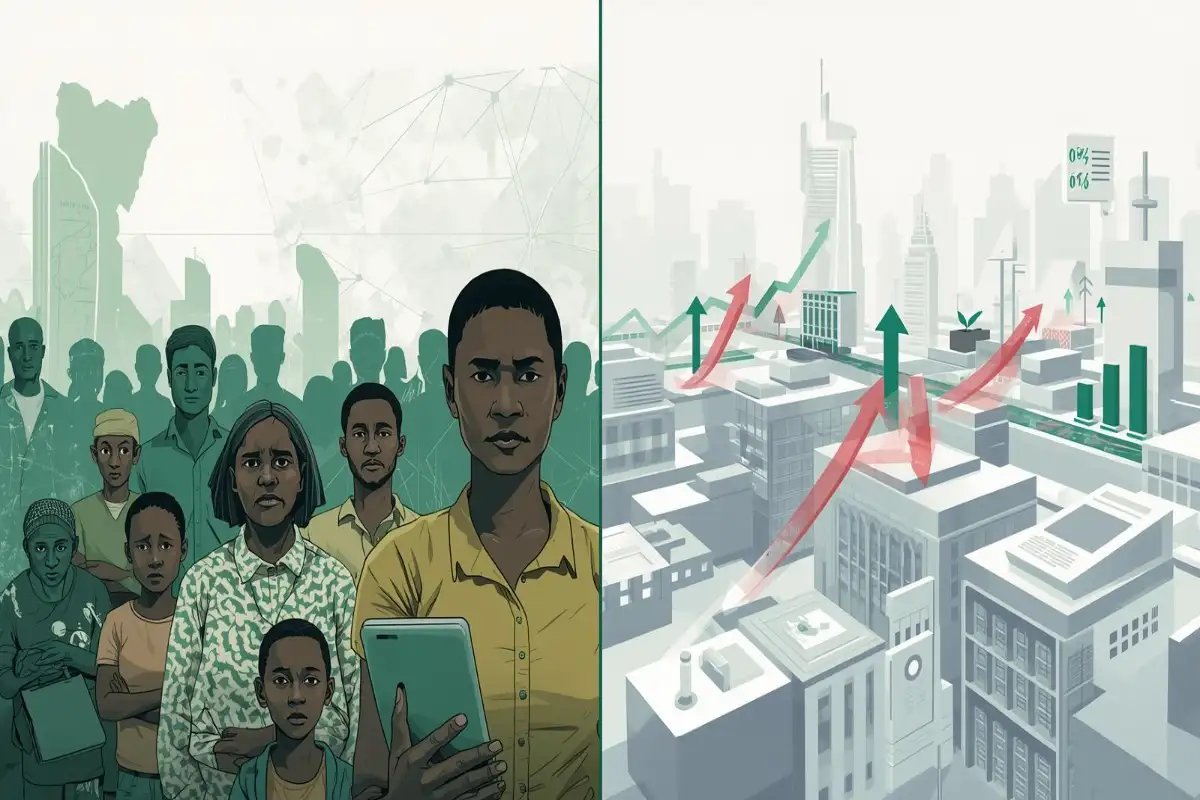
CBN Adopts New Strategy as Nigeria Misses 95% Financial Inclusion Target
The Central Bank of Nigeria (CBN) has admitted that despite significant progress, the country is yet to meet its ambitious financial inclusion target. This revelation came to light following the release of the bank's 2026 Macroeconomic Outlook and recent stakeholder engagements in Lagos.
The apex bank had set a lofty goal to reduce the financial exclusion rate to 5% by 2024, effectively targeting a 95% inclusion rate. However, recent data indicates that while inclusion has risen hitting approximately 74% a significant gap remains, particularly in rural demographics.
The Rural Divide
A major hurdle identified in the report is the persistent disparity between urban and rural access. Data reveals that a staggering 81% of financially excluded Nigerians reside in rural areas, where digital infrastructure remains weak. These communities often lack physical bank branches, making them heavily reliant on cash for daily transactions.
"We are seeing numbers improve, but the depth of inclusion is where the real work lies," a CBN representative noted during a recent industry forum. The bank highlighted that while account ownership has increased, "financial health" the ability of citizens to recover from economic shocks remains low.
Fintechs to the Rescue
To bridge this gap, the CBN is pivoting its strategy to lean more heavily on financial technology (fintech) companies. The regulator is actively encouraging collaboration between traditional banks and fintech firms to deploy agent banking networks in underserved regions.
The Governor of the CBN, Olayemi Cardoso, has emphasized the need for "innovative solutions" such as mobile money and the eNaira to reach the unbanked. The success of platforms like Moniepoint and OPay in penetrating informal markets is being viewed as a blueprint for future expansion.
Why It Matters
Closing the financial inclusion gap is not just about numbers; it is critical for the economy. Bringing more Nigerians into the formal financial net allows for better monetary policy transmission and gives small businesses access to much-needed credit.
As the CBN pushes for a "cashless revolution," the focus for 2026 will be on ensuring that the farmer in Benue and the trader in Kano have the same access to digital financial services as the banker in Lagos.
Stay tuned to Naijarave.com for updates on new CBN regulations affecting fintechs and mobile money agents.